
Вращающаяся печь
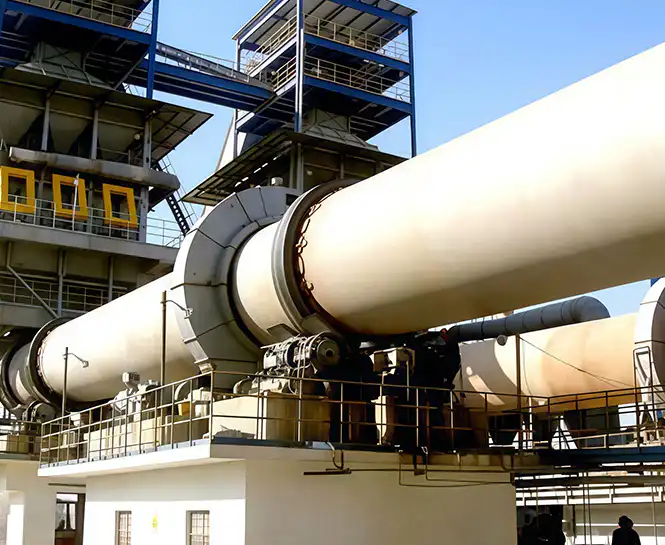
Вращающаяся печь относится к оборудованию для производства строительных материалов и, в зависимости от перерабатываемого материала, подразделяется на цементную печь, печь для металлургической химической промышленности и печь для обжига извести.
Цементная печь используется для производства цементного клинкера, при этом существуют сухой и мокрый способы его получения.
Печь для металлургической химической промышленности широко применяется для магнетизирующего обжига бедных железных руд и окислительного обжига хромистых и никелевых руд на металлургических заводах; для обжига высокоглиноземистых руд на предприятиях огнеупорной промышленности; для обжига шамота и глинозема на алюминиевых заводах; а также для обжига хромитовой руды и хромитового порошка на химических заводах.
Печь для обжига извести используется для обжига активной извести на сталелитейных заводах и заводах ферросплавов, а также для легкого обжига доломита.
Вместимость: 2-20т/ч
Модель: Ø1,6×32м – Ø4×80м
Вес оборудования:
46,8-564,8т
Область применения:
Подходит для применения в металлургической, химической и строительной отраслях промышленности и др.
Выдающиеся особенности вращающейся печи Hengxing
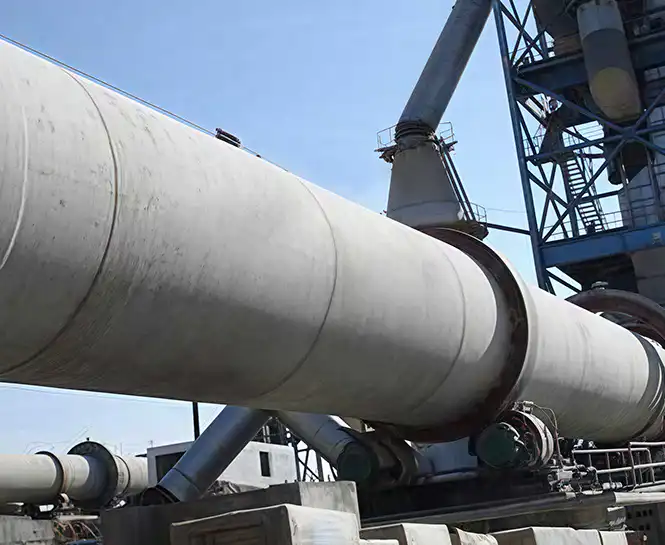
Вращающаяся печь используется для обжига высококачественного цемента на цементных заводах, а также широко применяется в металлургии, строительстве и химической промышленности.
Вращающиеся печи, производимые нашим заводом, отличаются прочной конструкцией, плавной работой и высоким качеством продукции. Кроме того, мы предоставляем нашим клиентам современные и эффективные шахтные подогреватели и пятиступенчатые циклонные подогреватели.
Типы продуктов
Типы вращающихся печей, предлагаемых к продаже компанией HengXing Machinery
9
Модели на продажу
Подробные товары
Ознакомьтесь с нашими высококачественными вращающимися печами
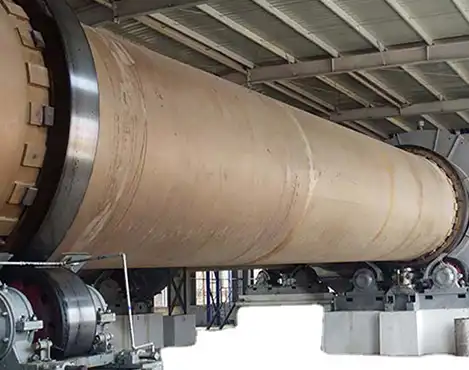
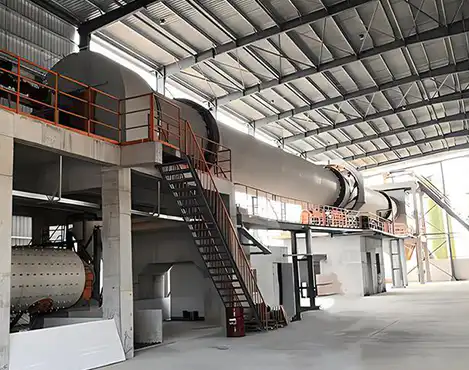
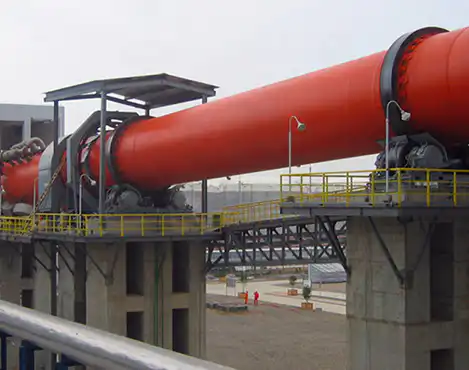
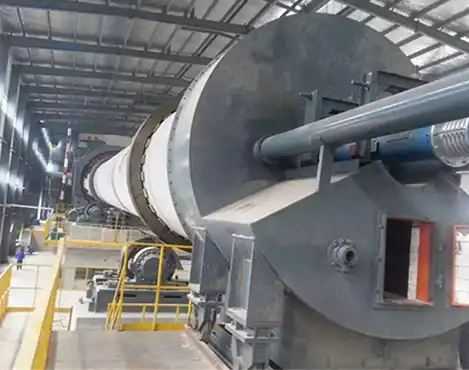
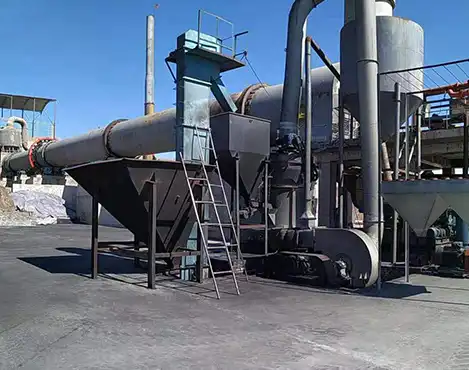
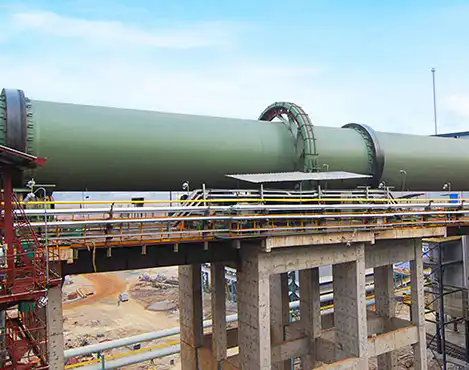
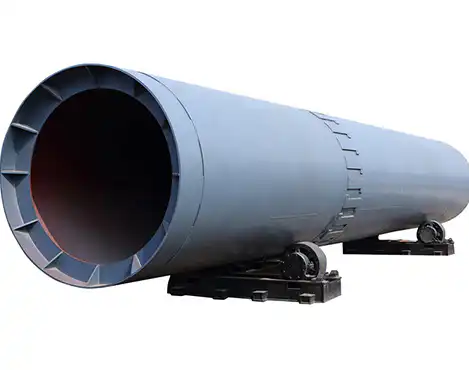
Технические характеристики вращающейся печи
| Модель (мм) | Размер печи | Производительность (т/ч) | Скорость (об/мин) | Электрическая мощность (кВт) | Масса (t) | Замечания | ||
| Диаметр (мм) | Длина (мм) | Градиент (%) | ||||||
| φ1,4×33 | 1.4 | 33 | 3 | 0.9-1.3 | 0.39-3.96 | 18.5 | 47.5 | —- |
| φ1,6×36 | 1.6 | 36 | 4 | 1.2-1.9 | 0.26-2.63 | 22 | 52 | —- |
| φ1,8×45 | 1.8 | 45 | 4 | 1.9-2.4 | 0.16-1.62 | 30 | 78.2 | —- |
| φ1,9×39 | 1.9 | 39 | 4 | 1.65-3 | 0.29-2.93 | 30 | 77.59 | —- |
| φ2,0×40 | 2 | 40 | 3 | 2.5-4 | 0.23-2.26 | 37 | 119.1 | —- |
| φ2.2×45 | 2.2 | 45 | 3.5 | 3.4-5.4 | 0.21-2.44 | 45 | 128.3 | —- |
| φ2,5×40 | 2.5 | 40 | 3.5 | 9.0-10.5 | 0.44-2.44 | 55 | 149.61 | —- |
| φ2,5×50 | 2.5 | 50 | 3 | 6.25-7.4 | 0.62-1.86 | 55 | 187.37 | —- |
| φ2,5×54 | 2.5 | 54 | 3.5 | 6.9-8.5 | 0.48-1.45 | 55 | 196.29 | —- |
| φ2,7×42 | 2.7 | 42 | 3.5 | 10.0-11.0 | 0.10-1.52 | 55 | 198.5 | —- |
| φ2,8×44 | 2.8 | 44 | 3.5 | 12.5-13.5 | 0.437-2.18 | 55 | 201.58 | Подвесная печь с подогревателем |
| φ3,0×45 | 3 | 45 | 3.5 | 12.8-14.5 | 0.5-2.47 | 75 | 210.94 | —- |
| φ3,0×48 | 3 | 48 | 3.5 | 25.6-29.3 | 0.6-3.48 | 100 | 237 | Печь, печь |
| φ3,0×60 | 3 | 60 | 3.5 | 12.3-14.1 | 0.3-2 | 100 | 310 | —- |
| φ3,2×50 | 3.2 | 50 | 4 | 40.5-42 | 0.6-3 | 125 | 278 | Печь, печь |
Принцип работы вращающейся печи
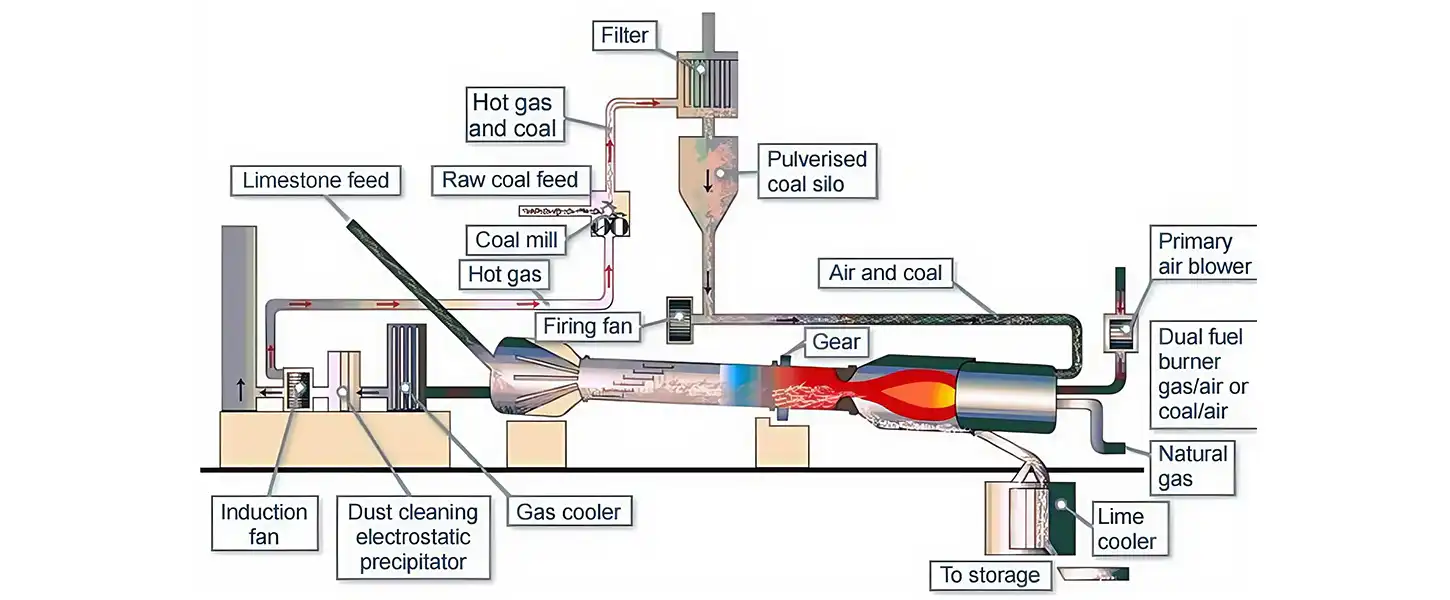
Вращающаяся печь представляет собой цилиндрический сосуд, установленный с небольшим наклоном к горизонту и медленно вращающийся вокруг своей оси. Обрабатываемый материал подается в верхнюю часть цилиндра. По мере вращения печи материал постепенно перемещается к нижнему концу, подвергаясь при этом определенному перемешиванию.
Горячие газы проходят вдоль печи, иногда в том же направлении, что и обрабатываемый материал (прямоток), но обычно — в противоположном направлении (противоток).
Горячие газы могут генерироваться во внешней топке или пламенем внутри печи. Такое пламя формируется горелочной трубой (или ‘трубой для обжига’), которая функционирует как большая горелка. В качестве топлива может использоваться газ, мазут или угольная пыль.
