
AAC block making machine
Products
High-performance AAC block making machine for superior construction solutions
Autoclaved Aerated Concrete (AAC) is a lightweight cellular silicate product primarily composed of silicon-based materials such as sand, fly ash, and gangue, along with calcium sources like cement and lime.
The manufacturing process begins with batching and mixing these ingredients, followed by the addition of a foaming agent, typically aluminium powder. The mixture is then poured into moulds and undergoes pre-curing.
Once set, it is cut into blocks and subjected to high-pressure steam curing (autoclaving). This process results in durable, lightweight concrete products suitable for various construction applications, offering excellent insulation and energy efficiency.
Major Types For Sale:
AAC block making machine
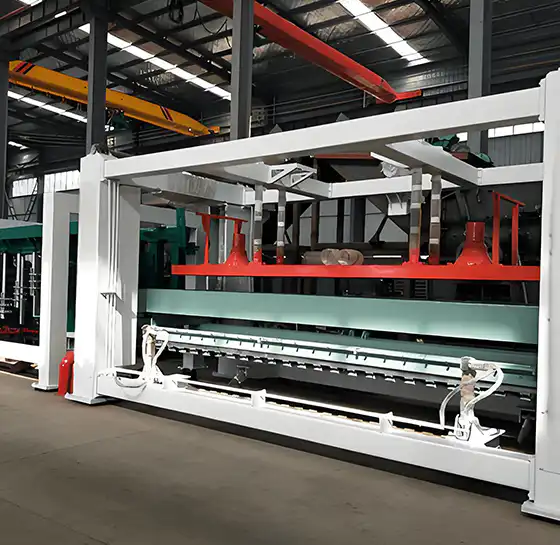
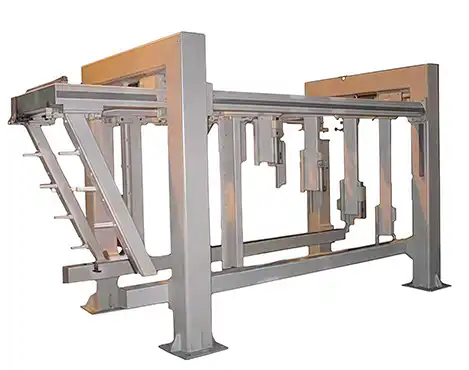
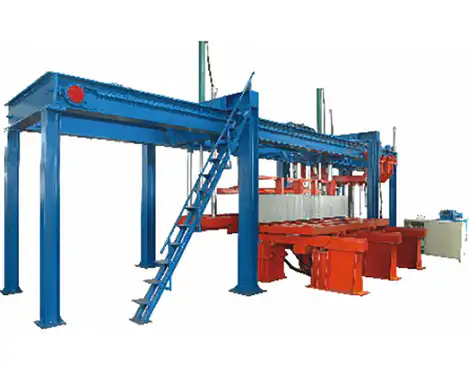
Ground turnover cutting machine
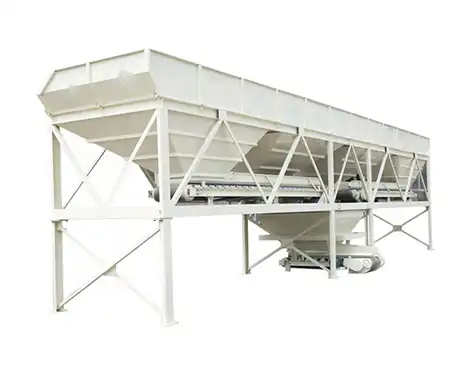
Batching machine
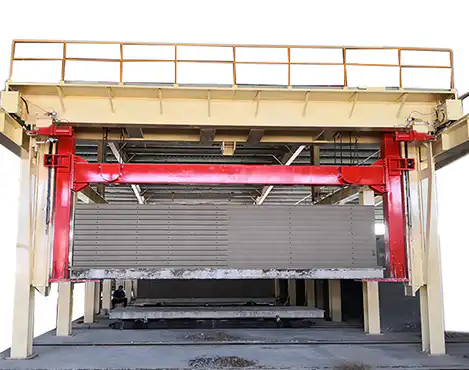
Air turnover cutting machine
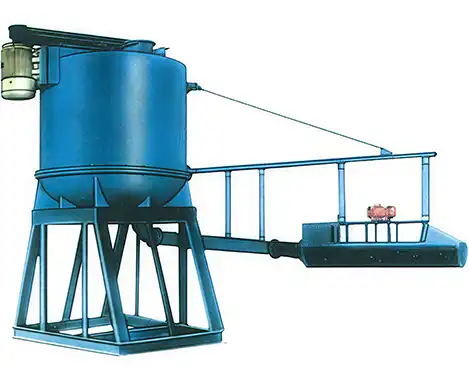
Pouring mixer
Product Types
Major AAC block making machine for sale in HengXing Machinery
5
Models for sale
Detailed Products
Check our quality AAC block making equipment
Introduction
Introduction of AAC block making production line
1. Storing and Supplying Raw Materials for AAC Blocks
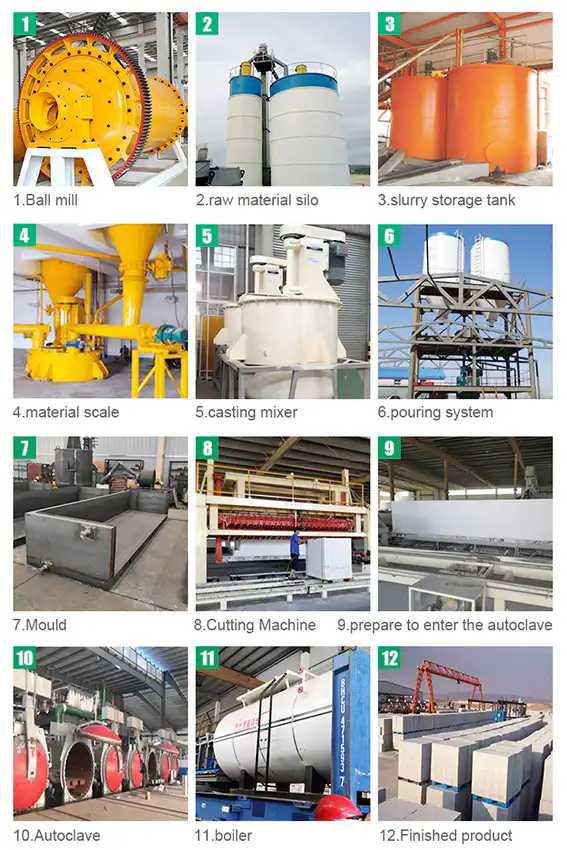
The raw materials for AAC blocks, such as fly ash, sand, and lime, are transported to the factory by trucks. These materials are stored in designated areas within the raw materials yard until needed for production. Cement is stored in both sacks and bulk in a dedicated cement warehouse. Chemicals and aluminium powder are stored separately in dedicated chemical and aluminium warehouses. When required, these raw materials are individually transported into the workshop for processing.
2. Processing of Raw Materials
Fly ash, sand, or limestone is fed into ball mills using vibration feeders and belt conveyors. The finely ground fly ash, sand, or lime powders are then pumped into a slurry tank. Quick lime is delivered to jaw crushers via vibrating feeders and belt conveyors for crushing. The crushed lime is subsequently transferred to a lime silo using a bucket elevator and then moved to ball mills through a screw conveyor. The finely processed materials are gathered in a proportioning bin using a screw conveyor and bucket elevator.
3. Aerated Block Ingredients, Stirring, and Casting
The ingredients for the aerated blocks, including fly ash (or sand or stone powder) and waste slurry, are measured in a measuring tank. Once the materials are measured and the moulds are appropriately positioned, the stirring of the slurry begins. The temperature of the slurry must reach approximately 40°C for optimal mixing.
Fully automatic AAC block production line specifications
Cement, lime, fly ash type aerated block raw material proportion:
| Name | Unit | Proportion |
| Fly ash | % | 65-70 |
| Cement | % | 6-15 |
| Lime | % | 18-25 |
| Gypsum | % | 3-5 |
| Aluminum powder paste(600kg/m³) | 1/10000 | 8 |
| Water&material rate | 0.60-0.65 | |
| Curing temperature | ℃ | 36-40 |
| Aluminum mixing time | S | 30-40 |
Cement, lime, sand type aerated block raw material proportion:
| Name | Unit | Proportion |
| Sand | % | 55-65 |
| Cement | % | 10-20 |
| Lime | % | 20-30 |
| Gypsum | % | 2-3 |
| Aluminum powder paste(600kg/m³) | 1/10000 | 8 |
| Water&material rate | 0.65-0.75 | |
| Casting system | ℃ | 35-38 |
| Aluminum mixing time | S | 30-40 |
Raw material processing:
(1)The cement is bulk cement, which is pneumatically transported to the cement storage bin by a bulk cement truck. The cement storage capacity considered in this design is 90t.
(2)After the lime and gypsum are crushed by the jaw crusher by calculation, the elevator enters the storage bin, is fed by electromagnetic vibration, enters the mill, and the finely mixed ash is transported by the elevator to the ash storage bin for backup.
(3)The sand is transported into the slurry storage tank through ball milling and water wet milling into a slurry storage tank, and after the slurry specific gravity required for production is reached, it is pumped to a stirring pouring machine through a slurry pump.
4. Aerated Block Pre-curing and Cutting
Ingredients Pouring
Once the raw materials are prepared, they are measured separately and then mixed using a stirring and pouring machine. The metered aluminium powder suspension is added to the mixture and stirred for 30 to 45 seconds before being poured into moulds.
Cutting Section
After pouring and foaming, the green body is allowed to sit statically for a specific duration (approximately 1.2 to 2 hours) until it achieves a certain degree of hardness. Once firm enough, the green body is lifted onto a steaming cart using a marshalling spreader and transferred into the autoclave.
Autoclave
Following the cutting of the green bodies, they are organized into specific quantities and transported to the autoclave, where they undergo the autoclaving process.
Features
We focus on product details and guarantee quality
Advantages
Advantages AAC block making plant
Lightweight:
Aerated concrete has a dry bulk density ranging from 400 to 800 kg/m³, making it approximately one-third the weight of clay bricks and one-fifth that of normal concrete. This reduced weight lowers the overall structural load on buildings, allowing for smaller foundations, girders, and pillars. This results in material savings, lower project costs, and improved seismic resistance.
Excellent Thermal Insulation:
The internal structure of aerated concrete contains numerous tiny air pockets, providing exceptional thermal insulation properties. Its thermal conductivity coefficient typically ranges from 0.09 to 0.2 W/(m·K), which is only about one-fourth to one-fifth that of clay bricks and normal concrete. A 20 cm thick aerated concrete wall offers thermal insulation equivalent to a 49 cm thick wall made of normal clay bricks, effectively reducing heating and cooling energy consumption while maximizing building space efficiency.
High Processability:
Since aerated concrete does not contain coarse aggregates, it boasts excellent processability. It can be easily sawed, drilled, and pinned, and can bond well with suitable adhesives. This versatility simplifies construction operations and allows for easier customization onsite.
Abundant Raw Material Sources and Production Efficiency:
AAC can be manufactured from a variety of raw materials, including sand, slag, fly ash, tailings, coal gangue, quicklime, and cement. This adaptability allows for high utilization of local resources and industrial waste. A medium-sized AAC plant can achieve annual labor efficiency of up to 600 m³ per capita, while highly automated plants can reach 900 to 1,000 m³. This efficiency far exceeds that of clay bricks (180 m³) and concrete bricks (500-800 m³).
Moreover, the energy consumption for producing AAC units is only 50% of that of the same volume of clay bricks. Despite having only a 40-year industrial history in China, AAC has evolved to include a range of products, such as non-load-bearing and load-bearing blocks, insulation blocks, and wall and roof panels, establishing itself as a vital new building material for both industrial and civil construction.
Setup
AAC Block Manufacturing Plant Setup in India: Maximizing ROI with Hengxing Machinery Solutions
1. Advanced Technology for Superior Efficiency
Hengxing Machinery’s turnkey AAC production lines integrate German-engineered cutting systems and AI-powered quality control, delivering 30% faster cycle times vs. conventional setups. Our patented vertical casting technology ensures precise block dimensions (±1mm tolerance) while reducing raw material waste by 18%. With fully automated slurry mixing and PLC-controlled curing, clients achieve 500+ m³/day output using 40% less labor.
2. Localized Support & Cost Optimization
As India’s only AAC machinery provider with 3 regional service hubs (Gujarat, Tamil Nadu, Uttar Pradesh), we guarantee 24-hour technical response and local spare parts inventory. Our modular plant design cuts setup costs by ₹1.2 crore vs. European imports, with hybrid automation options balancing Capex and productivity. Clients leverage our government subsidy partnerships to secure 15-25% cost rebates on equipment purchases.
3. Proven Success in Indian Markets
A recent Maharashtra client achieved ₹5.8 crore annual profit using our 400 m³/day system, recovering investments in 2.3 years – 22% faster than industry averages. Our India-specific adaptations (monsoon-proof control systems, fly ash optimization modules) ensure 95% uptime even in harsh conditions. With 15+ operational plants nationwide, we deliver certified BIS compliance and lifetime process training – key reasons why 80% of clients expand capacity with us within 3 years.
Hengxing Machinery – Powering India’s Green Construction Revolution with Smart AAC Solution.
Differences
Air turnover cutting machine vs. ground turnover cutting machine
When comparing air turnover cutting machines and ground turnover cutting machines used in the manufacturing of Autoclaved Aerated Concrete (AAC) blocks, distinct differences in design, operation, and applicability emerge.
Air Turnover Cutting Machine:
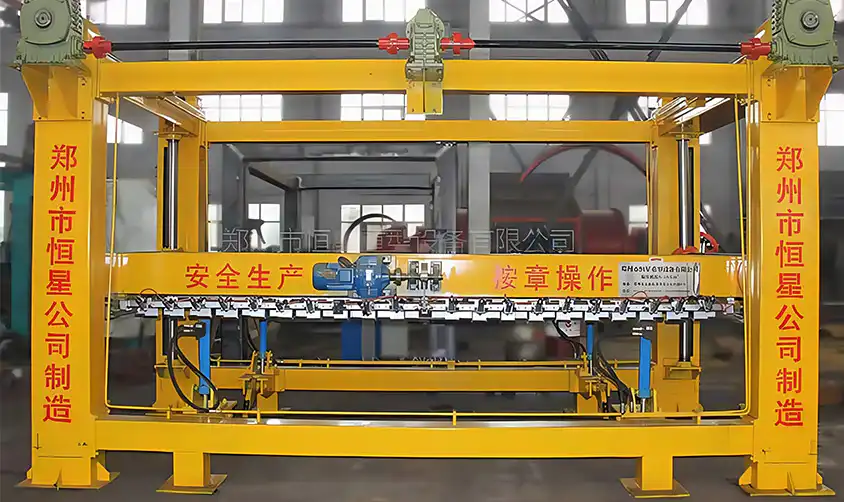
This type of machine utilizes air suspension to lift and turn the green bodies of AAC blocks during the cutting process. The air turnover mechanism minimizes physical contact with the block, reducing the risk of damage and allowing for smoother transitions between different stages of production. Air turnover machines are known for their precision and efficiency, enabling uniform cutting accuracy and reducing the time needed for handling the blocks. Additionally, they require less floor space due to their vertical lifting mechanisms, optimizing factory layout.
Ground Turnover Cutting Machine:
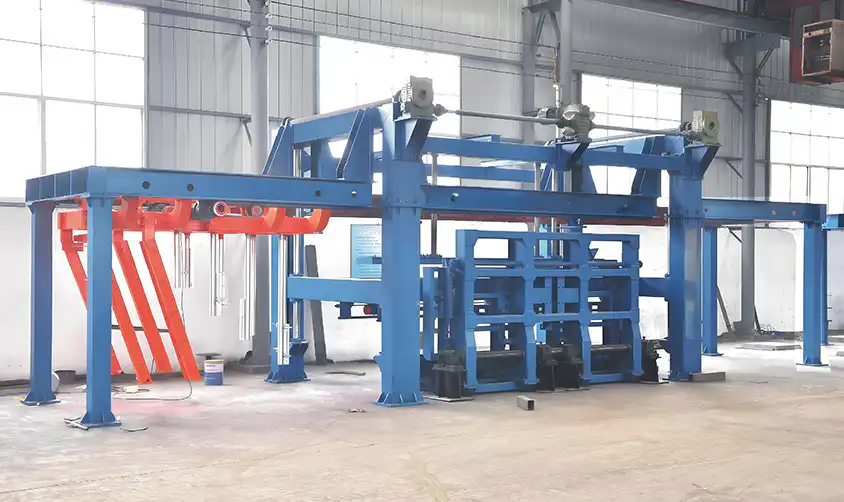
In contrast, ground turnover cutting machines operate by physically lifting and rotating the green bodies using mechanical arms or platforms. This design typically involves heavier equipment and may require more space in the production area. While ground turnover machines are reliable and effective, they can be slower in operation compared to their air turnover counterparts. These machines may also increase physical wear and tear on the blocks due to more extensive handling, potentially impacting the quality of the final product.
In summary, air turnover cutting machines offer enhanced efficiency, precision, and space-saving advantages, while ground turnover cutting machines provide a more traditional and straightforward approach to cutting AAC blocks, each suitable for different production needs and environments.
